

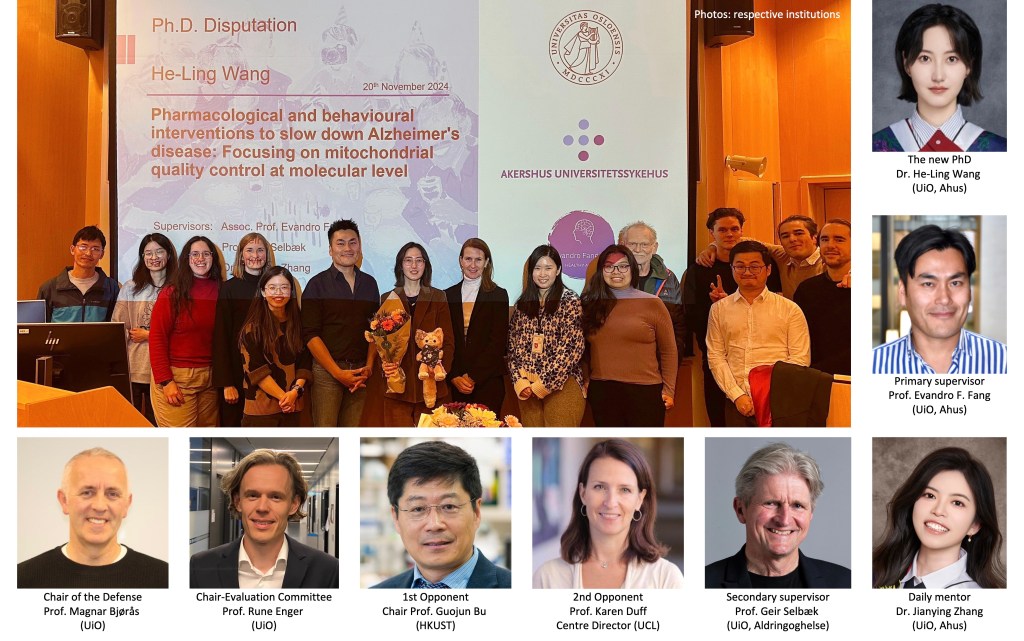
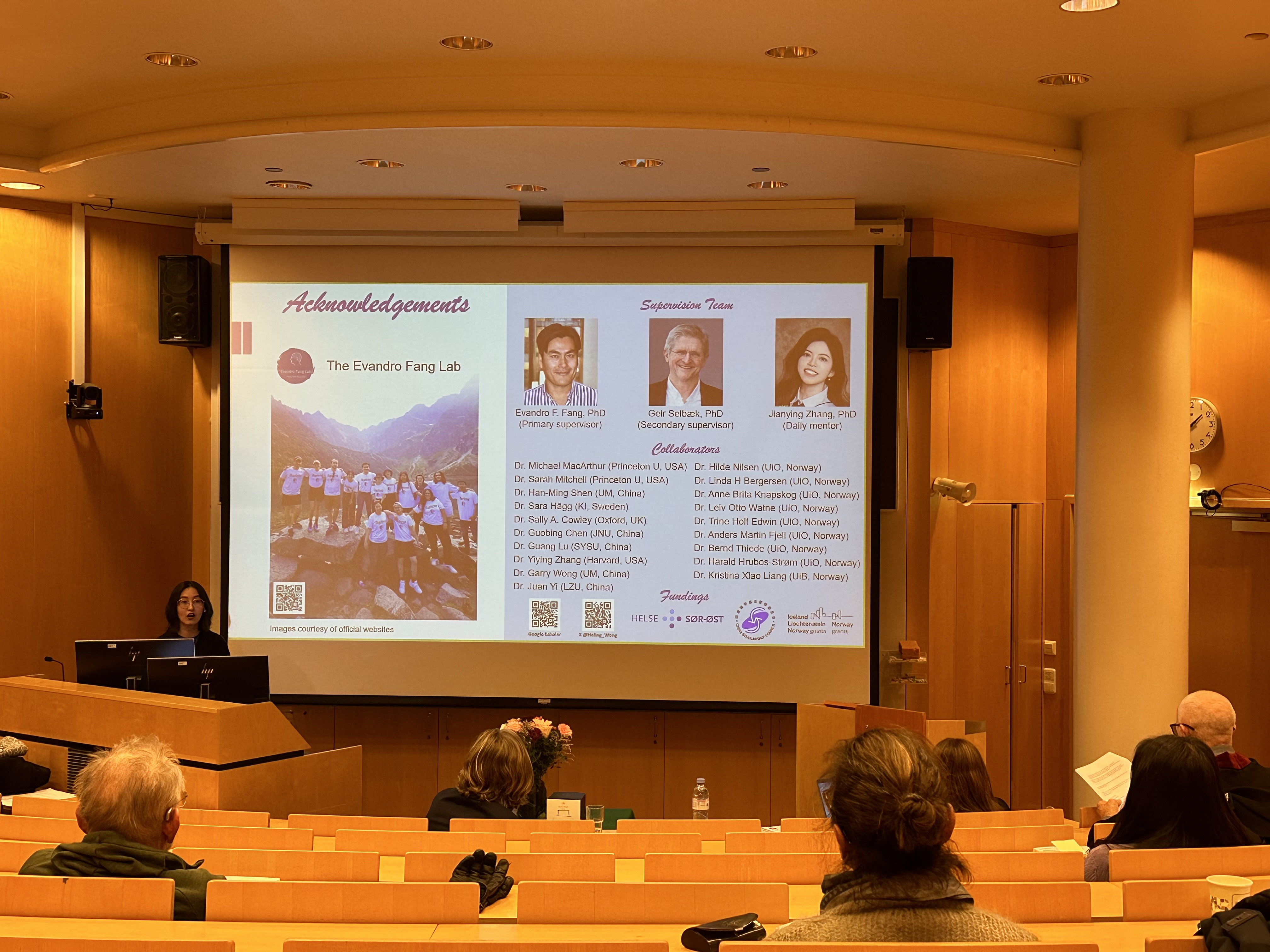
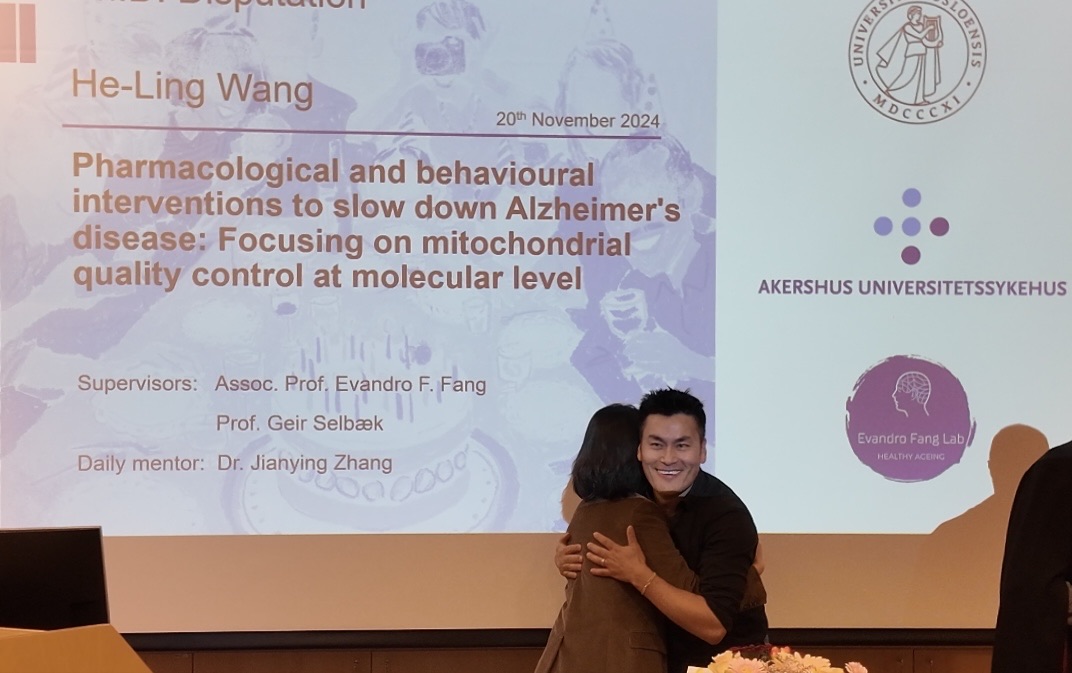
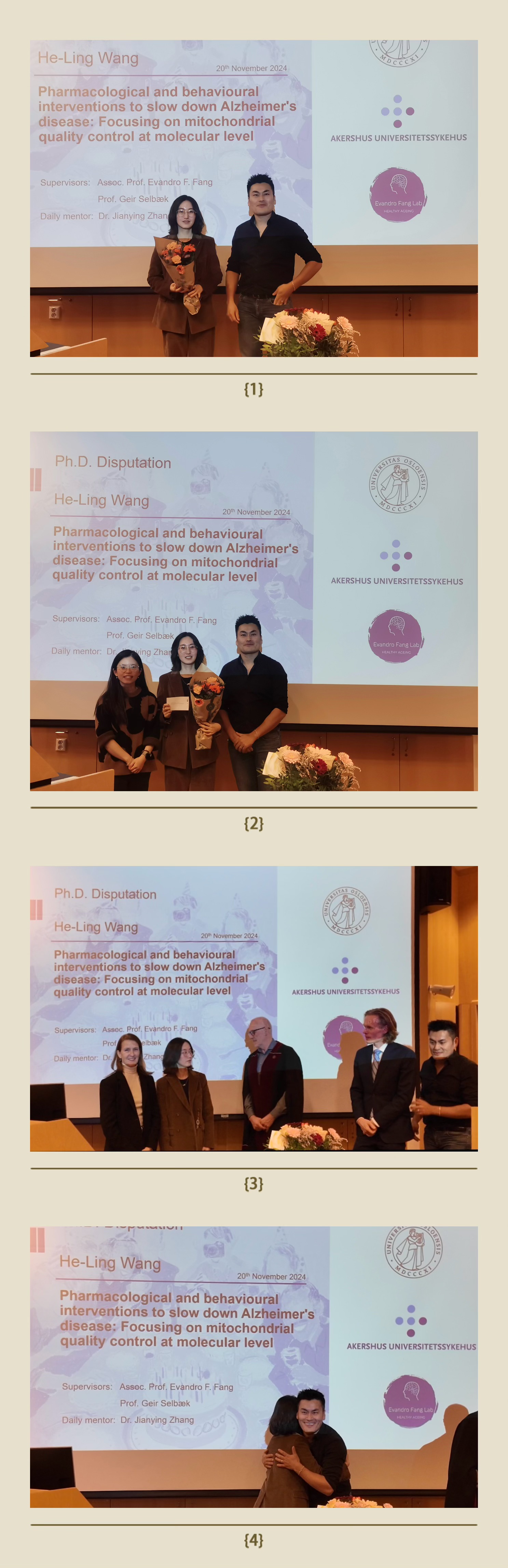
On 20 Nov. 2024, our student He-Ling WANG successfully defended her PhD thesis entitled ‘Pharmacological and behavioural interventions to slow down Alzheimer’s disease: Focusing on mitochondrial quality control at molecular level’, mentored by Associate Prof. Evandro Fang, Prof. Geir Selbæk, and Dr. Janet Jian-Ying ZHANG.
Adjudication committee
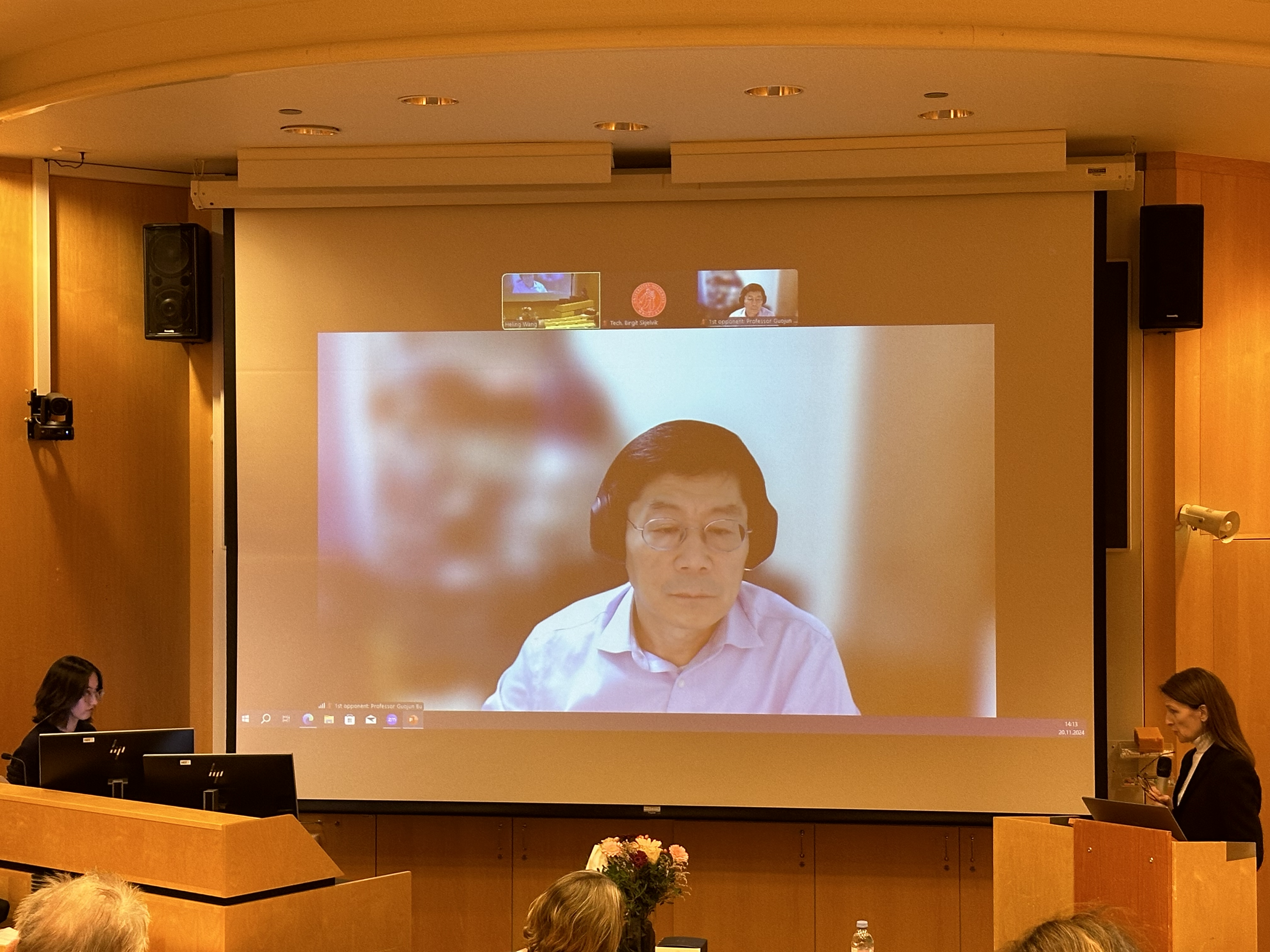
First opponent: Chair Professor Guojun Bu, The Hong Kong University of Science and Technology,
Second opponent: Centre Director Karen Duff, UK Dementia Research Institute, University College London,
Third member and chair of the evaluation committee: Associate Professor Rune Enger, University of Oslo
Chair of the Defence
Professor Magnar Bjørås, University of Oslo
Summary
Alzheimer’s disease (AD) and related dementias present significant global health challenges, affecting over 57 million people worldwide. This thesis investigates mitochondrial dysfunction as a critical factor in AD progression, situated within n neuroscience and gerontology. The primary research questions focus on the impact of mitochondrial health on neuronal survival and the potential of therapeutic strategies to mitigate disease effects.
The research encompasses three interconnected projects: First, the evaluation of Spautin-1 as a therapeutic agent that enhances PINK1-PRKN-mediated mitophagy, promoting the removal of damaged mitochondria to improve neuronal function. Second, the assessment of NAD+ supplementation in the context of APOE4, a major genetic risk factor for AD, which improves mitochondrial metabolism and neuronal health. Third, the exploration of the synergistic effects of NAD+ supplementation combined with exercise on mitochondrial quality control and cognitive function in AD animal models characterized by amyloid-beta (Aβ) and Tau pathologies.
Key findings indicate that mitochondrial dysfunction contributes to neuronal loss and cognitive decline in AD. Spautin-1 enhances mitophagy and restores associative learning in affected models. Furthermore, NAD+ supplementation improves the metabolism of branched-chain amino acids (BCAAs), crucial for mitochondrial health, particularly in APOE4-associated AD. The combination of NAD+ supplementation with exercise further enhances mitochondrial function and neuronal resilience, highlighting a comprehensive strategy for AD management.
In conclusion, this thesis emphasizes the importance of mitochondrial management in slowing AD progression, suggesting that integrated therapeutic approaches may provide new avenues for effective treatment strategies.







Q-A (partially) with Prof. Guo-Jun BU (HKUST): here
Q-A (partially) with Prof. Karen Duff (UCL): here
Release of the defense result: here
 Evandro Fang Lab